
The system develops best with ongoing care
In many organizations, development needs do not arise as large, clearly defined projects. Often, they stem from observations, user feedback, changing processes, new integration needs, version updates, security requirements, or small improvements that, when combined, significantly impact the system’s usability and lifecycle.
Fluentia Care, a maintenance model that includes continuous development, addresses this very need. It allows the system to be improved regularly without having to launch a separate project for every change. Development can be carried out in small increments, needs can be prioritized together with the customer, and it ensures that changes support the system’s long-term direction.
This approach also helps avoid situations where the system remains technically operational but gradually begins to fall behind the actual needs of the business. With continuous development, the system does not become stagnant but evolves alongside the organization.
The same team understands both the history and the next steps
Combining ongoing maintenance with development adds value, especially when the system is managed by familiar experts. When the same team understands the system’s technical architecture, background, user needs, and previous solutions, development doesn’t have to start from scratch every time.
This reduces the loss of context and also improves decision-making. Maintenance constantly generates information about how the system works in practice: where recurring problems occur, which parts require more attention, what kinds of changes have affected daily operations, and where it would be sensible to make proactive improvements. When this information flows directly into development, the system’s evolution is based on real observations rather than isolated assumptions.
At the same time, from the customer’s perspective, the collaboration remains more transparent. There are no unnecessary barriers between development, maintenance, monitoring, and continuous improvement; instead, the entire process is managed as a single lifecycle.
A scalable model provides flexibility to meet changing needs
Not all systems have the same development needs every month. Sometimes, only routine maintenance and monitoring are required. At other times, however, there may be a sudden need to increase development efforts: a new feature needs to be implemented, an integration needs to be updated, performance needs to be improved, or the architecture needs to be evaluated more closely.
A maintenance model that incorporates continuous development allows for this flexibility. The customer does not need to keep a large development team on standby at all times, but expertise can be scaled up quickly when needed. Development can be ramped up when there is a real need and scaled back when the focus is more on stable maintenance.
This is particularly important for systems that are critical to business operations but have varying development needs. The model helps ensure that expertise remains available without creating an unnecessarily burdensome cost structure. At the same time, system expertise is not lost even during quieter periods, as the team stays engaged with the day-to-day operations of the system through maintenance.
The system’s lifecycle involves continuous decision-making
Systems don’t stay useful on their own. They require technical maintenance, listening to users, understanding business changes, and the ability to develop the right things at the right time.
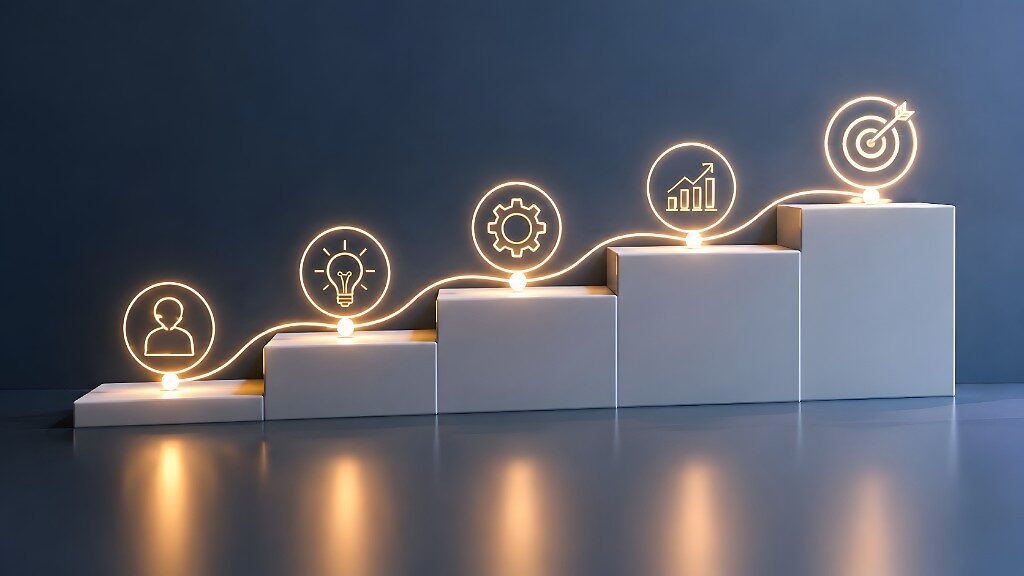
When maintenance and continuous development are integrated into a single operating model, the system’s lifecycle can be managed holistically. Development is not a separate project superimposed on maintenance, nor is maintenance merely a necessary expense after deployment. Together, they form a model that allows the system to evolve in a controlled, flexible, and purposeful manner throughout its entire lifecycle.
Read more:
Do you want to ensure that your systems remain reliable and evolve alongside your business? Get in touch, and let’s discuss how Fluentia’s maintenance and continuous development model can best support your organization.